- Eat at Joe's
- Posts
- Eat at Joe's: The easiest dish you can eat
Eat at Joe's: The easiest dish you can eat
Khichdi, the Indian rice-and-lentil dish, and other porridges are not just simple to make, they're easy on your stomach, making them so comforting and healing whenever you need it, which is always. A recipe for Master Khichdi and multiple variations on the theme.

Joe Yonan
January 18, 2026
Easy on me and you
I’ve cried to many an Adele song. There’s the classic “Someone Like You,” naturally, the saddest song ever written (with perhaps the exception of “I Can’t Make You Love Me” by Bonnie Raitt), so sad that SNL turned it into a hilarious but sob-filled workplace sketch. (If you can find that video online, please send it to me; I’m tired of searching!)
But the one that got me most recently (albeit four years ago) was “Easy on Me.” Who can’t identify with the sense of pleading that what you need more than anything is for someone — everyone, perhaps — to treat you with kindness, to understand that you’re vulnerable and imperfect and sometimes just need the world to cut you some slack?
Table of Contents
I’ve been fascinated by the idea of “ease” lately. I’ve taken up sewing — obsessively, TBH — and in sewing parlance the term doesn’t refer to how doable a pattern is, how simple the instructions or construction, but instead to the difference between your body measurements and the measurements of a final garment. That is, the space between your clothes and your skin. You never want the two measurements to be identical or even close to such — well, not unless you’re wearing a Beyonce-style catsuit, where skintight is the name of the game — or you’d never be able to get into what you’re wearing.
You want ease. Ease = comfort.
At the table or in the kitchen, easy recipes are certainly considered those that you can pull off at a moment’s notice, ones that don’t require complicated steps or sauces or the like. But if ease = comfort, shouldn’t an easy dish be one that requires the least amount of disruption in … the eating, or the digesting?
Sometimes we all want to eat something that stimulates, that energizes. For me, that’s often something spicy, or tangy, or bitter, or some combination of the above. But other times — many other times — we want something that calms, that settles, that eases.
In so many places in the world, that means some type of porridge made at least in part from a grain. China has its congee, Korea its juk, Japan its okayu. Those are all based on rice, but the grain in a porridge can be rye in Norway and barley in Scotland, millet or corn (as in polenta) in Italy or (as in grits) in America; millet in Africa.
In India, the porridge is khichdi (aka kichidi, kitchary, kitcharee and many other spellings), which combines rice with yellow lentils — actually split mung beans, or moong dal — in what cookbook author Sapna Punjabi calls “as basic a recipe as one can cook.” She dedicates her first book, “Dal Chawal,” to the powerhouse combination of rice and dal and refers to chichi as a “gut reset meal” for its digestibility.
D.C. has its own khichdi ambassador: Priya Ammu, who built an entire fast-casual restaurant (now closed) around the concept, told me, “It’s the first food that babies eat, but it’s so much more than that.” For “Mastering the Art of Plant-Based Cooking,” I worked (and cooked!) with her to come up with a recipe for a basic approach to the dish — along with several variations.
Why so many versions? Because every region, sub-region, neighborhood, community, even household makes theirs a little differently. Priya, for one, prefers hers a little tighter and less soupy than many traditional versions, so be aware of that when making this one. If you want more of a porridge consistency, just add water when finishing — much like you would with risotto.
Because no matter how you make khichdi (or how you spell it), you always want it to be easy. Easy on you, easy on me, easy on whoever is fortunate enough to be eating it.
My next Zoom cooking class: Let’s make soup!
For my third Zoom cooking class, set for Sunday, Jan. 25, at noon, I’m going to show you how to turn (nearly) any vegetable you want into a great soup. We’ll talk Instant Pot, slow cooker, stovetop, oven, immersion vs. upright blenders, and the all-important topic of texture and garnishes that can improve it.
As always, you get 25 percent off a ticket to the class as a subscriber to this newsletter; just use the promo code “eatatjoes”! And don’t worry; if you just want to watch and not cook along, you’re welcome to do that. And if you can’t make it live but want to watch later, your ticket gets you access to a recording.
I break for animals:
Midna the Twilight Princess

Recipe: Master Khichdi
|

This is Priya Ammu’s basic version of khichdi, the Indian rice-and-lentil dish known for its comforting, healing properties. Priya makes hers less soupy than is traditional, but you can feel free to add more water when finishing it if you’d like. I’ve listed several variations after the basic recipe, giving you another way to make this your own.
Makes 6 servings // Time: Weekend // Storage: Refrigerate for up to 3 days or freeze for up to 3 months.
Ingredients
1 cup (180g) basmati rice
1½ cups (295g) yellow lentils (aka split mung beans)
3 tablespoons canola oil or olive oil
2 teaspoons cumin seeds
2 bay leaves
1 black cardamom pod
1 small yellow onion (5 ounces/140g), chopped
2 tablespoons minced or grated peeled fresh ginger
½ teaspoon asafoetida (hing; optional)
4 cups (950ml) water
½ teaspoon ground turmeric
1 teaspoon fine sea salt, plus more to taste
Directions
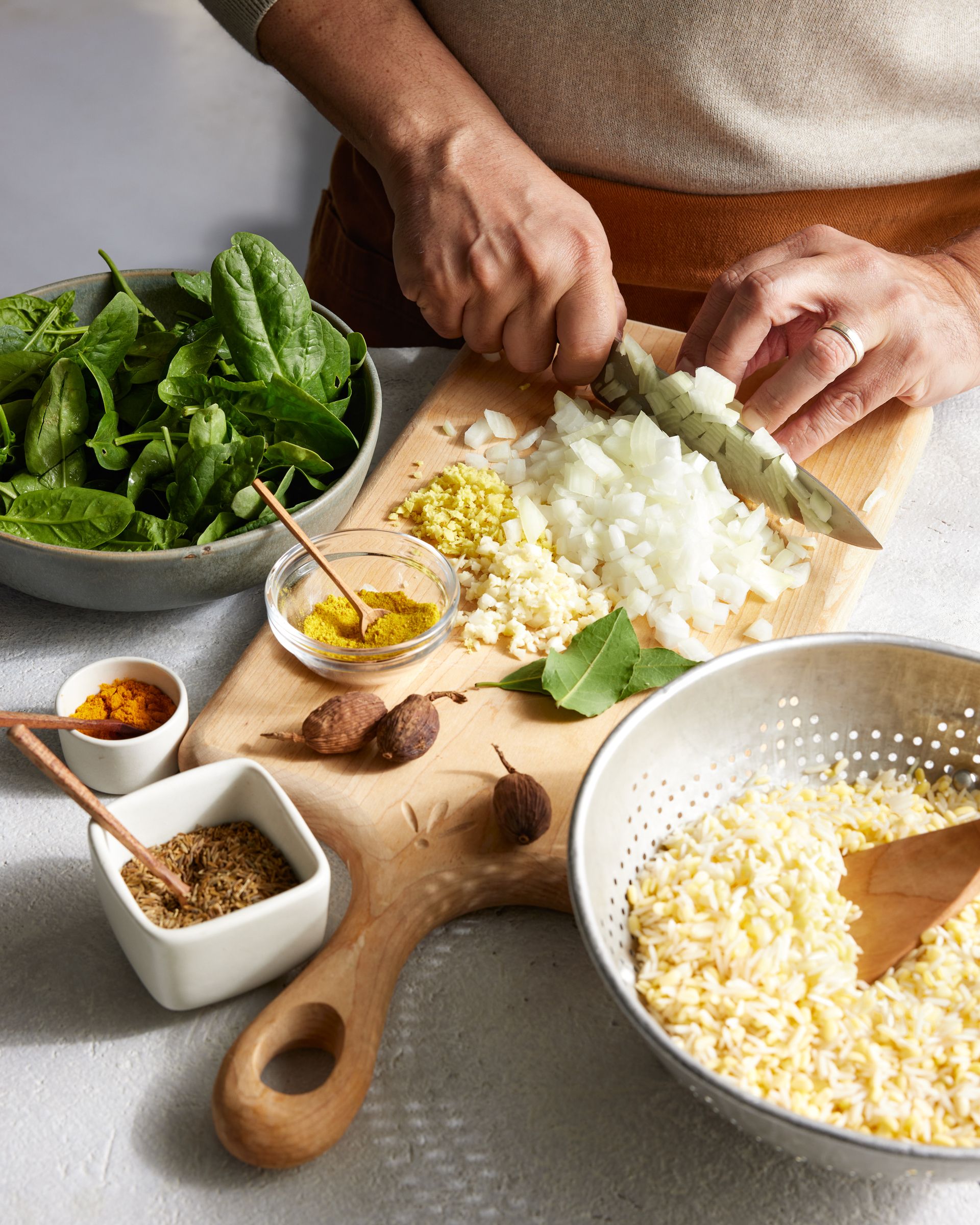
Using a fine-mesh sieve, rinse the rice and lentils for a few minutes under cold running water. Transfer them to a bowl, add enough water to cover by 2 inches (5cm), and soak for 2 hours. Drain.
In a large saucepan, heat the oil over medium-high heat until it shimmers. Add the cumin, bay leaves, and cardamom and sauté until very fragrant, about 1 minute. Add the onion, ginger, and asafoetida and sauté until the onions are golden brown, 7 or 8 minutes. Add the drained rice/lentil mixture and sauté until the rice and lentils are toasted slightly in the oil, about 2 minutes.
Add the water, turmeric, and salt and bring to a boil. Reduce the heat until the mixture is at a simmer, cover, and cook until the water is fully absorbed, 10 to 12 minutes.
Khichdi Variations
Vegetables
SPINACH: Add 3 cloves chopped garlic when sautéing the onion. Add 4 cups (80g) packed baby spinach leaves when adding the drained rice/lentil mixture and reduce the water to 3½ cups (830ml).
CABBAGE: Add 3 cloves chopped garlic when sautéing the onion. Add 2 cups (180g) packed thinly sliced cabbage when adding the drained rice/lentil mixture.
CAULIFLOWER: Pan-fry or roast 4 cups (540g) cauliflower florets until browned and crisp, then fold into the finished khichdi, or layer on top before serving.
Grains
BROWN RICE: Use in place of basmati. Cook in 8 cups (1.9L) water instead of 4 for 20 to 24 minutes instead of 10 to 12.
KALA ROSEMATTA RICE: Use the same amount of water and cooking time as basmati.
Legumes
WHOLE MUNG BEANS: Use in place of the yellow lentils, but soak separately from the rice, for 8 hours.
WHOLE BLACK URAD BEANS: Use in place of the yellow lentils, but soak separately from the rice, for 8 hours.
Recipe from “Mastering the Art of Plant-Based Cooking” (Ten Speed Press, 2024), copyright Joe Yonan.
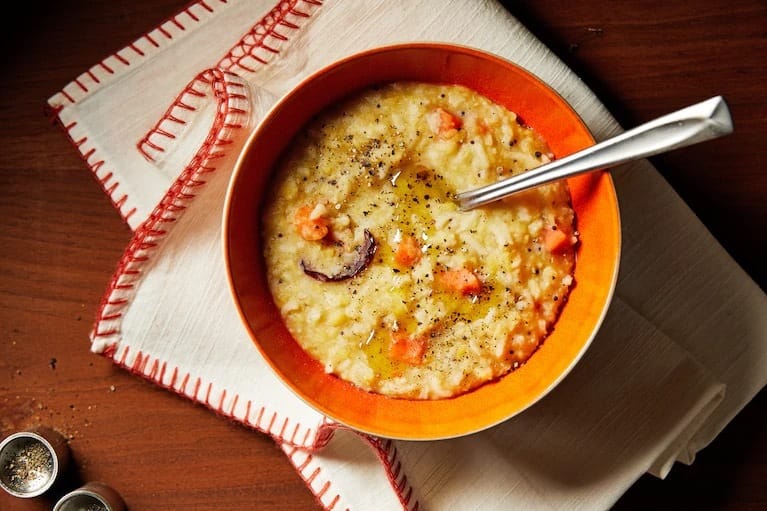
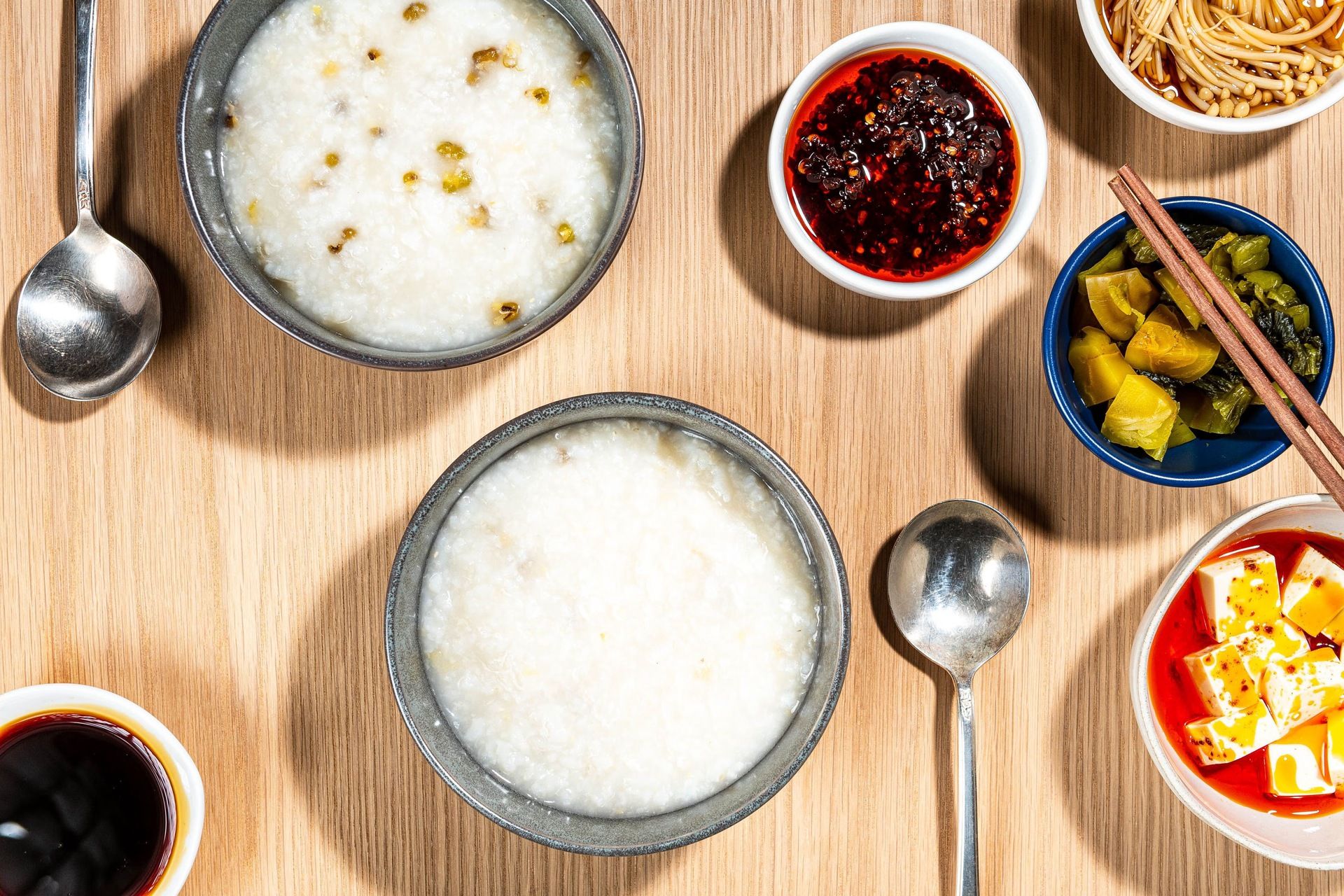
More favorite porridge recipes
These are gift links to the recipes at the Post. Note that they require you to register but not subscribe. Gift links are free to access for 2 weeks, so if you want to come back to any of these recipes but don’t subscribe or want to subscribe, I suggest you find a way to save them!

That’s it for this week’s newsletter. Do you have friends you think might want to Eat at Joe’s? Invite them today and don’t forget those gifts you can earn through referrals — see above!
If you were forwarded this email, welcome! And know that you can get your very own copy in your very own in-box of your very own phone or laptop on your very own Sundays by clicking below.
Until next week,

Reply